
On 4 September 2026, the Unlocking Data Initiative, a pan-African community of learning, published a blog titled “Barriers to Accessing Foundational Learning Data in Cameroon: From Evidence to Classroom Action”. Written by Jillian Makungu, it reflects on the work of Ngom Maceline Anwi, Founder and Executive Director of AWA.
Enrolled is not the same as included
The blog uses learners with albinism to show why averages can hide the children who are left behind. As it explains, a learner may be enrolled in school but still struggle to read written materials comfortably, move safely around the school environment, or take part fully in classroom activities.
It argues that learning data should not stop at collection. Schools and education systems need to assess, interpret, respond and reassess, so that evidence leads to real changes in the classroom. Good data looks at the barriers learners face, rather than treating those challenges as the learner’s fault.
From evidence to classroom action
The blog highlights AWA’s work to adopt and adapt the Teacher’s Information Booklet on Albinism for Cameroon as an example of turning evidence into practical guidance for teachers.
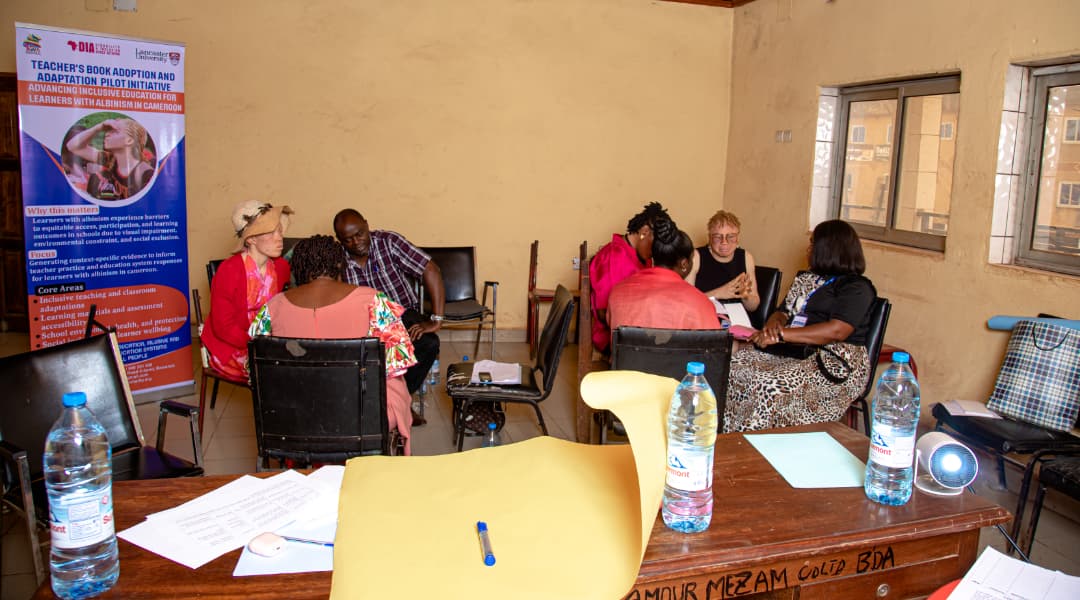
Shaped through a review of existing guidance, an online survey, consultations with teachers and a pilot workshop in Bamenda on 21 February 2026, the booklet gives teachers simple steps they can take every day: seating learners near the board, writing clearly and in large letters, providing accessible learning materials, protecting learners from the sun, and keeping classrooms free from bullying and stigma.
For AWA, this is what inclusion means: not only that a child with albinism is in school, but that they can see, take part, learn and feel safe there.
We thank the Unlocking Data Initiative for this recognition, and our partners Lancaster University, the Disability and Inclusion Africa Network, the Regional Delegations of Basic and Secondary Education in the North-West Region, and the teachers who are helping to shape the booklet.
