Charity for Albinism
 Are you ready to help them? Let’s become a volunteers...
Charity for Albinism
Are you ready to help them? Let’s become a volunteers...
The Association for the Welfare of Albinos (AWA) is leading an initiative to adopt and adapt a Teacher’s Information Booklet on Albinism to the Cameroonian education context, with a particular focus on helping teachers better support learners with albinism in school.
Inclusive education is not only about ensuring that a child is enrolled in school. It is also about ensuring that the learner can see, participate, learn, feel safe, and be treated with dignity throughout the school environment.
Learners with albinism can face barriers in school that are often misunderstood or overlooked. These may include low vision, sensitivity to bright sunlight, difficulties seeing writing on the board, challenges accessing learning materials, bullying and stigma, and limited understanding of albinism among teachers, classmates and the wider school community.
While teachers may be willing to support learners with albinism, they may not always have access to practical guidance that responds to the realities of their classrooms.
The purpose of this initiative is therefore to contribute to a resource that teachers can understand, use and apply within the Cameroonian school environment.
The initiative is not simply about reproducing an existing booklet. It is about adopting useful information and adapting it to the realities, experiences and educational context of Cameroon.
The initiative builds on an existing Teacher’s Information Booklet on Albinism and examines how its content can be made more relevant and practical for teachers in Cameroon.
The adaptation process considers questions such as:
These questions are helping to shape the adaptation process.
AWA is using a participatory and evidence-informed process to understand the needs of teachers and learners and to identify areas where the existing guidance requires contextual adaptation.
The process has included:
1. Review of the existing Teacher’s Information Booklet
The existing resource was reviewed to identify information that could be retained, strengthened or adapted for the Cameroonian context.
2. Contextual review
The content is being examined in relation to the realities of schools and classrooms in Cameroon, including the experiences of teachers and learners with albinism.
3. Online survey
An online survey was used to gather information and perspectives relevant to the development of the Cameroon-contextualised resource. The information gathered is contributing to the identification of practical needs, challenges and areas requiring further attention.
4. Stakeholder engagement
Teachers and education stakeholders have been engaged in discussions around the practical challenges faced by learners with albinism and the support that teachers require.
5. Pilot workshop
A pilot workshop was organised as an important part of the adaptation process, providing an opportunity to review selected content, discuss its relevance and identify areas that needed to be strengthened or contextualised.
6. Development of the Cameroon-contextualised booklet
The information gathered through the review, survey, stakeholder engagement and pilot process is being used to inform the development of a Teacher’s Information Booklet that reflects the Cameroonian context.
The booklet is still under development, and the process will continue to incorporate learning and feedback as the work progresses.
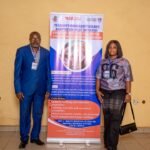
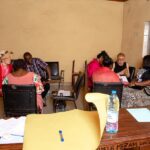
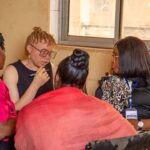
As part of the pilot process, AWA organised a pilot workshop on 21 February 2026 at Amour Mezam Conference Hall in Bamenda, bringing together teachers and education stakeholders to discuss the adaptation of information on albinism for use in schools.
The workshop provided an opportunity to examine selected sections of the existing Teacher’s Information Booklet and consider how the content could better respond to the realities of learners with albinism in Cameroon.
Teachers from schools around Bamenda participated in the process, including educators from Educare Primary, Fonab Secondary School Bamenda, and GBHS Bamendankwe, and other participating schools and education stakeholders.
The discussions focused on practical issues affecting the participation and learning of learners with albinism, including low vision, classroom accessibility, learning materials, sun protection, stigma, bullying, teacher knowledge and school-level support.
The workshop was an important step in moving the resource from a general information booklet towards guidance that can be meaningful and practical within Cameroon.
The developing Cameroon Teachers’ Information Booklet is addressing practical areas that can influence the educational experience of learners with albinism.
The resource seeks to provide teachers with accurate information about albinism and challenge misconceptions that can contribute to fear, stigma and discrimination.
Learners with albinism have different levels of vision. Practical classroom support may include appropriate seating, clear and sufficiently large writing, access to individual learning materials, appropriate lighting, reduced glare and the use of visual aids where necessary.
The adaptation considers practical measures that schools and teachers can take to make classrooms and school environments more accessible, including seating arrangements, visibility of learning materials and access to shaded areas.
Because many people with albinism have increased sensitivity to sunlight, the resource highlights practical approaches to sun protection within the school environment.
Teachers have an important role in creating school environments where learners with albinism are respected and protected from teasing, bullying, discrimination and harmful beliefs.
The resource also recognises the importance of emotional wellbeing, self-confidence, peer relationships and supportive communication for learners who may experience stigma or social isolation.
Effective inclusion requires more than individual teachers working alone. School leadership, teachers, parents, education authorities and relevant organisations all have roles to play in creating supportive learning environments.
This initiative is being implemented through collaboration among education, disability and development stakeholders.
Lead organisation:
Association for the Welfare of Albinos (AWA), Cameroon
Partners and collaborating stakeholders include:
The collaboration brings together technical knowledge, education-sector perspectives and practical experience to support the development of a resource that can contribute to more inclusive education for learners with albinism.
The development of the Cameroon Teacher’s Information Booklet is an ongoing process.
AWA recognises that a useful resource should not be developed in isolation. It should be informed by the realities of teachers, learners, schools and communities.
For this reason, the initiative is continuing to learn from evidence, consultation and practical experience.
The current work is therefore not presented as a finished product. Rather, it represents an important stage in a continuing process of listening, reviewing, adapting and improving.
As the booklet progresses, further learning and feedback will help strengthen its content and relevance to the Cameroonian education context.
AWA’s goal is to contribute to a practical resource that teachers can use to better understand albinism and respond to the specific needs of learners with albinism in their classrooms.
The longer-term vision is for learners with albinism to experience schools where they are seen, understood, supported and protected, and where their right to education is accompanied by the practical support needed to participate and learn.
The development of this booklet is one step towards that vision.
A teacher’s understanding can change a classroom.
A school’s willingness to adapt can change a learner’s experience.
And when evidence, education and inclusion come together, they can help create learning environments where every learner has the opportunity to participate, learn and thrive.
Project: Adoption and Adaptation of the Teachers’ Information Booklet on Albinism for Cameroon
Lead: Association for the Welfare of Albinos (AWA), Cameroon
Focus: Inclusive education for learners with albinism
Location: North-West Region, Cameroon
Approach: Contextual review, online survey, stakeholder engagement and pilot workshop
Pilot Workshop: 21 February 2026, Bamenda
Current Status: Booklet under development
Expected Resource: Cameroon-contextualised Teacher’s Information Booklet on Albinism.